What is a Heat Interface Unit (HIU)?
A Heat Interface Unit (HIU) is the smart heart of a modern heating system in apartments and multi-dwelling buildings. It acts as the vital link between a centralised heat network and an individual property—delivering heating and hot water efficiently, safely, and on demand.
Think of it as your home’s personal energy hub. Instead of relying on a standalone boiler, the HIU connects to a communal heating system and instantly provides everything you need, exactly when you need it.
How Does an HIU Work?
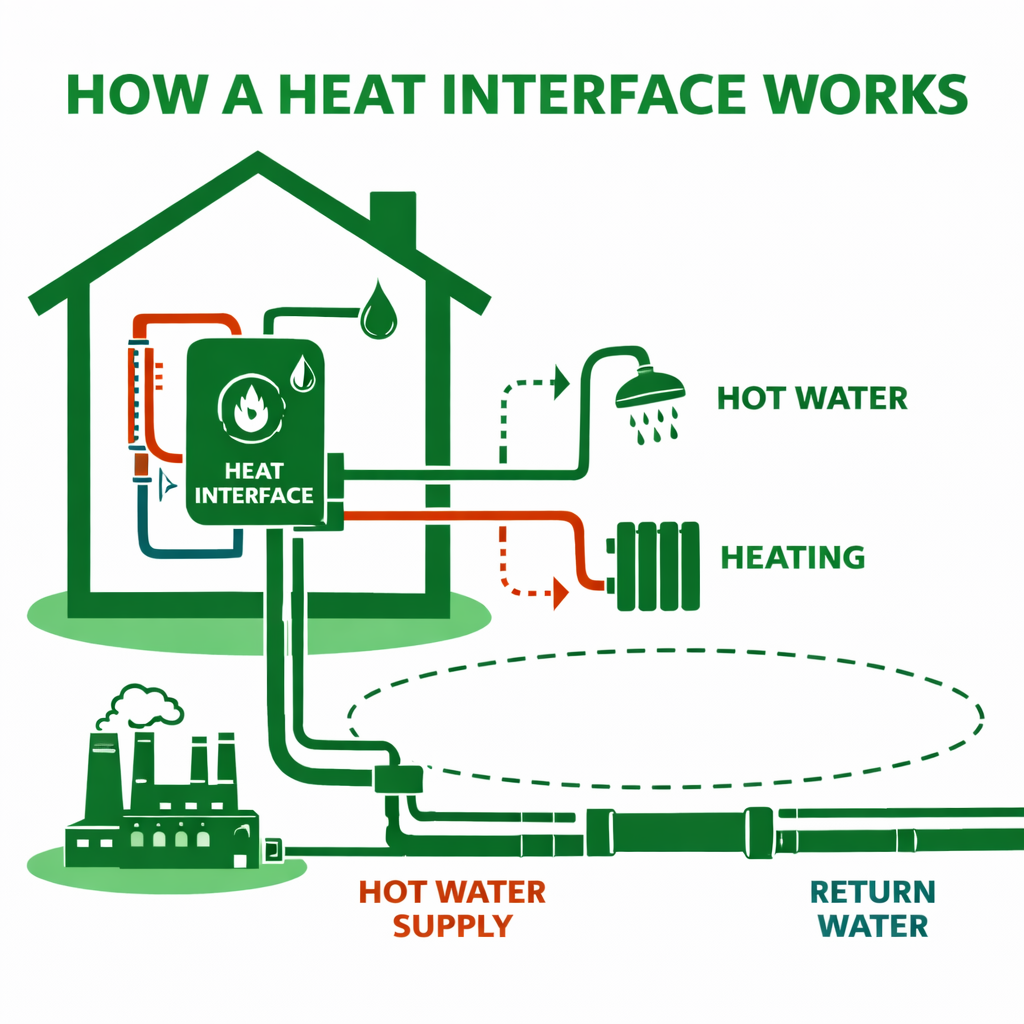
At its core, an HIU transfers heat from a central energy source—such as a district heating network—into your home without mixing the water supplies. Using advanced heat exchangers, it delivers:
- Instant hot water whenever you turn on a tap
- Consistent central heating controlled by your thermostat
- Precise energy usage measurement for accurate billing
This means no stored hot water tanks, no gas supply inside your property, and significantly reduced maintenance requirements.
Hydraulic separation within a Heat Interface Unit (HIU) is a fundamental design principle that allows the primary heat network (district side) and the secondary system (dwelling side) to operate independently, while still transferring heat efficiently between them.
Here’s a clear, detailed breakdown:
Primary circuit (heat network side)
Hot water is supplied from the central plant through the network.
This water enters the HIU under network-controlled pressure and flow conditions.
Plate heat exchanger (the key component)
The primary water passes through one side of a plate heat exchanger.
On the other side, the secondary (internal) water flows separately.
Heat transfers across the plates without the two water systems mixing.
Secondary circuit (apartment side)
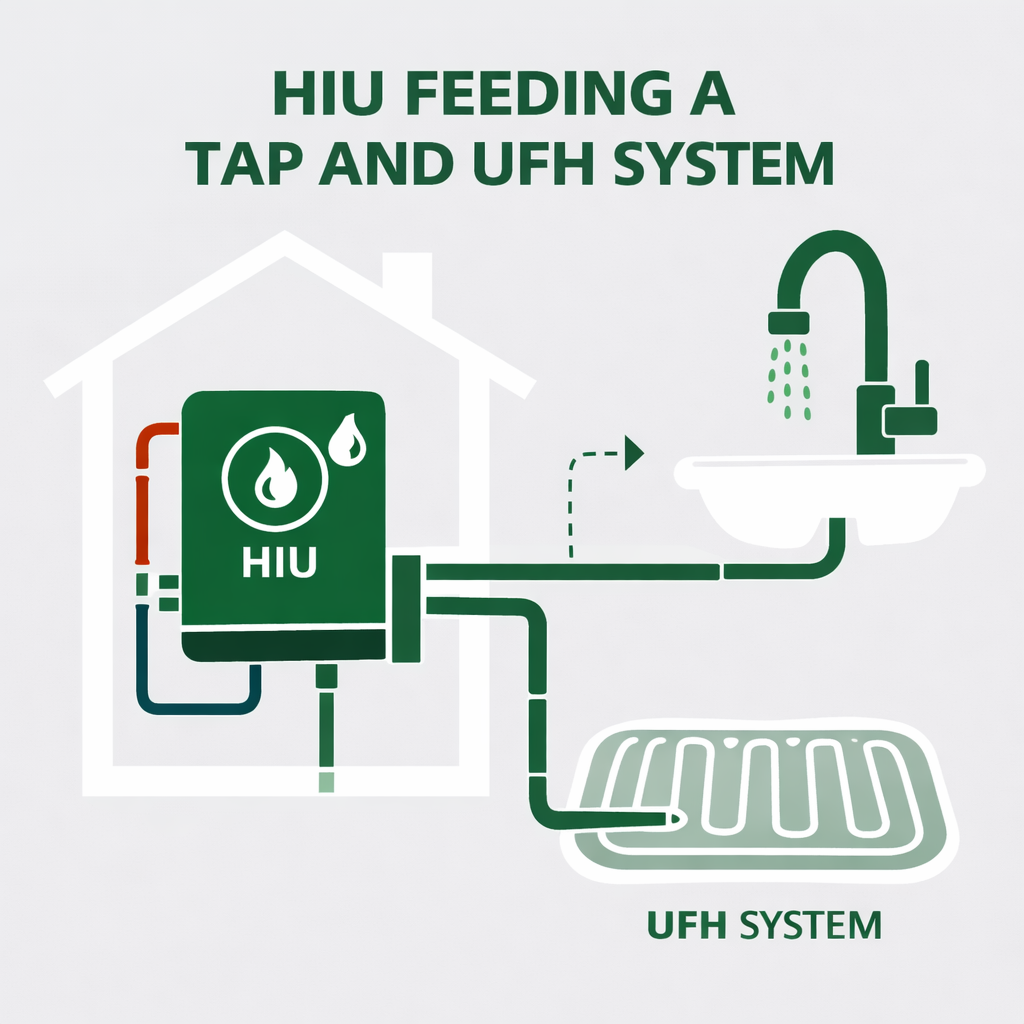
The HIU uses the transferred heat to supply:
Domestic hot water (DHW)
Space heating (radiators or UFH)
This side operates at its own pressure and flow, controlled locally