The YGHP Mechanical Heat Interface Unit
Description
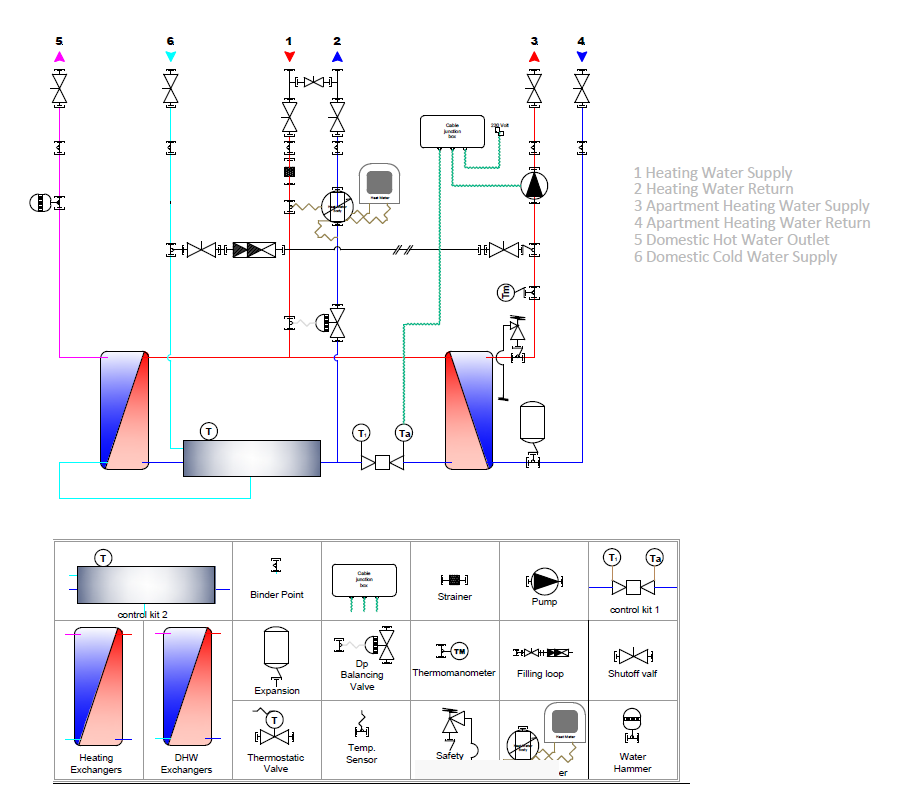
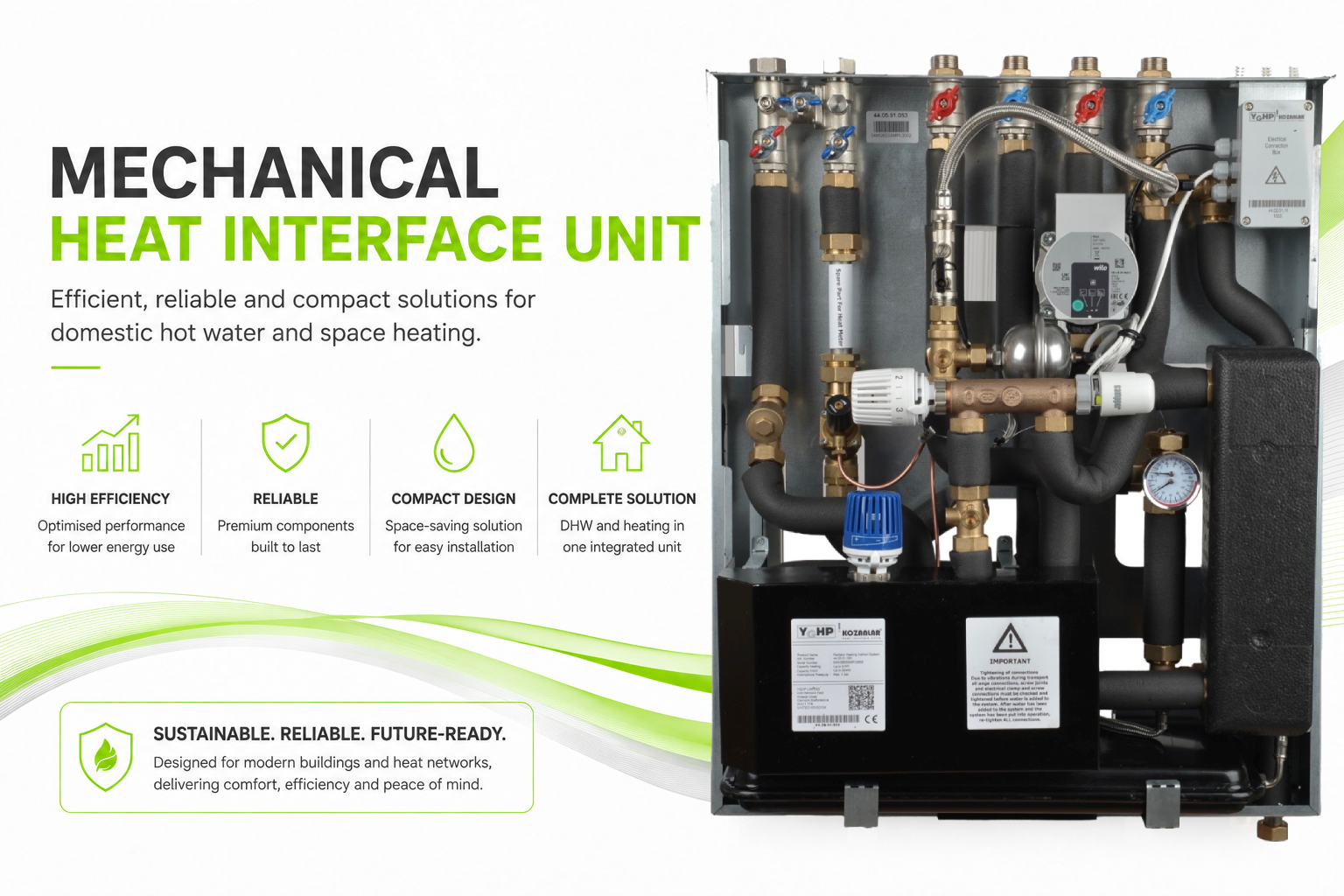
The YGHP Mechanical Heat Interface Unit is designed to provide domestic hot water and space heating to individual dwellings where heat is supplied from an external centralised source or heat network. Its indirect design uses separate heat exchangers for domestic hot water and apartment heating, providing effective heat transfer while keeping the dwelling heating circuit isolated from the primary heat supply.
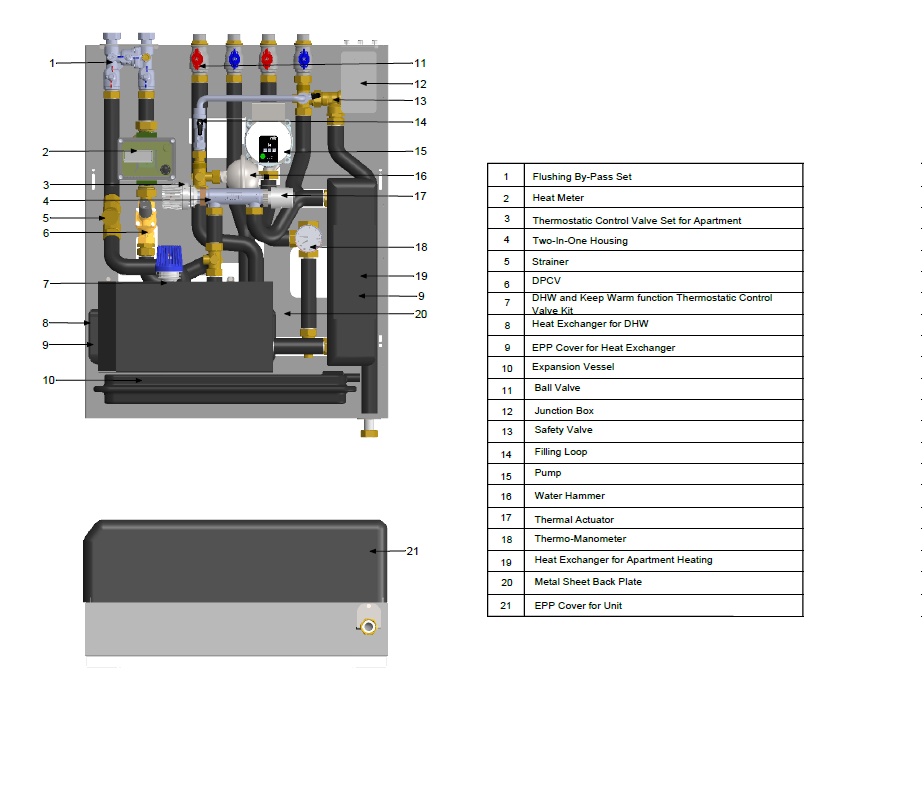
Designed as a complete, compact solution, the unit incorporates key heating and control components within a single assembly. It can be configured for either radiator or underfloor heating and includes an electronically controlled circulation pump, expansion vessel, safety valve and combined temperature and pressure gauge.
Features
- Indirect twin plate design with separate DHW and apartment heating heat exchangers
- Suitable for radiator or underfloor heating systems
- DHW temperature adjustable from 20°C to 55°C
- DHW flow rate options from 6 to 14 litres per minute
- DHW heat exchanger capacities from 25kW to 40kW
- Electronically controlled Wilo Para 15/7 circulation pump
- Integrated 8-litre expansion vessel
- Differential pressure control valve for system balancing
- Thermostatic DHW temperature control without requiring an electrical supply
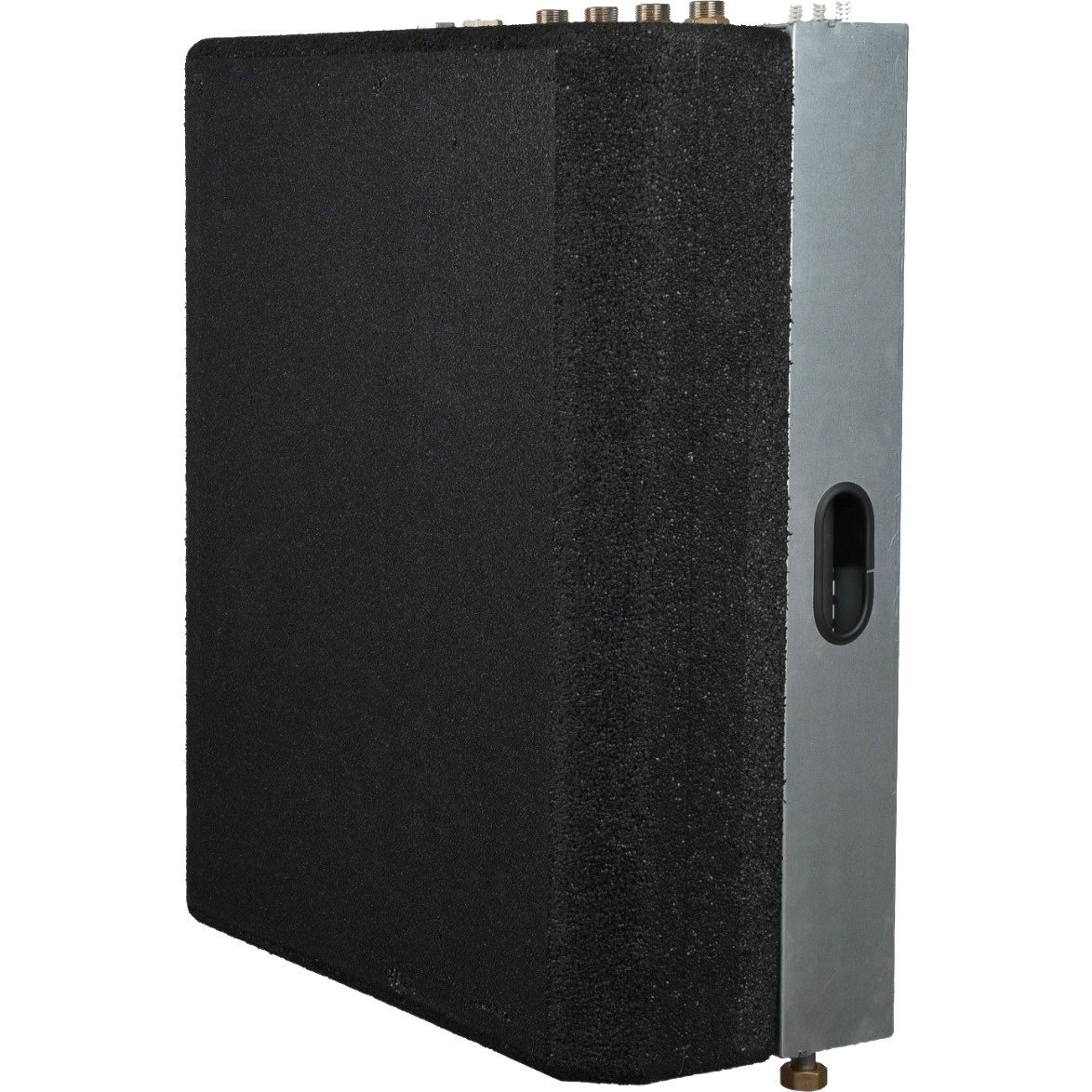
- Compact wall-mounted design with EPP insulation cover
- ¾” BSP primary, secondary and domestic water connections
Flexibility
- 5, 7 and lifetime warranty available
- Pipe alteration kit allows for top or bottom connections
- Ongoing service and maintenance packages
- Available with remote monitoring packages
- Available as credit or PAYG billing
- Available with wired or wireless MBUS energy meters
- Built in isolation ball valves allow for easier install limiting exposure to theft or damage
- EPP cover for superior thermal protection with option for white goods cover
Technical
Primary: 16 Bar
DHW Mains: 10 Bar
Tertiary HTG: 3 Bar
DHW Setpoint: 25-55c
HTG Setpoint: 30-50c
Pump Settings: Speed 1,2 & 3 Variable Pressure, Constant Differential Pressure & Constant Speed


YGHP Mechanical HIUs: Why Simplicity Can Be the Smarter Long-Term Solution
In modern heat networks, there is an understandable temptation to assume that more electronics automatically means better performance. More sensors, more software, more control functions and more data can certainly sound impressive on a specification sheet but can pose future issues.
Simplicity is a feature, not a compromise
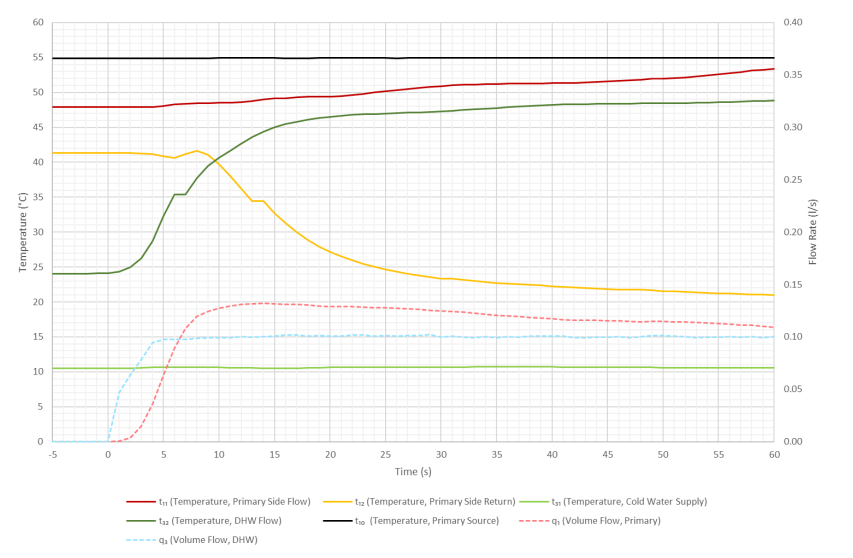
The fundamental strength of the YGHP mechanical HIU is its simplicity. Instead of relying on electronic sensors to continually interpret conditions and decide how the HIU should respond, a mechanical HIU can use hydraulic and thermostatic principles to react directly to what is happening within the system.
Open a hot-water tap and the HIU responds to demand. The thermostatic control regulates the supply temperature. Differential-pressure control helps stabilise operation as network conditions change. With a mechanical HIU, hot water stability is king:
Designed with long life in mind
A HIU is not a consumer electronic product that residents expect to replace every few years. It is part of the building’s heating infrastructure.
That changes the way longevity should be considered. The important question isn’t simply:
“How sophisticated is this HIU today?”
It is:
“How straightforward will this HIU be to keep working ten, fifteen or potentially twenty years from now?”
The YGHP mechanical HIU has an inherent advantage because its core operating principles are relatively straightforward.
There is no main electronic control strategy required simply to generate hot water. No software is needed to interpret a hot-water request. A mechanical thermostatic valve can regulate temperature without requiring an electrical supply for that basic function. The YGHP mechanical HIU has been demonstrated to still meet regulation nearing 10 years old!