

What Is a Heat Network?
A heat network (also known as district heating) is a smart, efficient way of supplying heat to multiple buildings from a central source. Instead of each home or business having its own boiler, heat is generated in one location and distributed through insulated pipes.
Heat network heat sources can include air source heat pumps, ground source heat pumps, CHP and gas boilers.
Heat networks are becoming a key part of the transition to low-carbon energy and more sustainable locations driven by zoning.
What Is Zoning in Heat Networks?
The UK Government has introduced heat network zoning as part of its strategy to decarbonise heating and improve energy efficiency in densely populated areas. Under this framework, specific geographic areas—known as “heat network zones”—are identified as locations where district heating systems are expected to be the most cost-effective and low-carbon solution.
Within these designated zones, Energy Service Companies (ESCOs) are given the opportunity (and in some cases exclusivity) to develop, own, and operate heat network infrastructure. These networks typically distribute heat generated from centralised, often low-carbon sources (such as waste heat, heat pumps, or combined heat and power plants) to multiple buildings through a system of insulated pipes.
How Does a Heat Network Work?
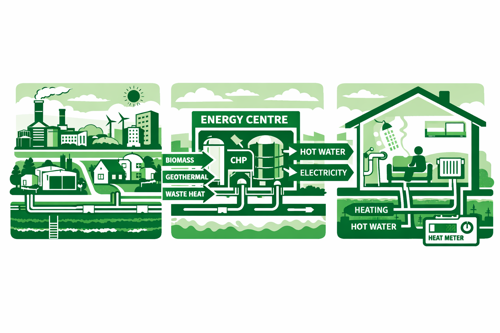
A heat network operates through three main components:
1. Central Heat Source
Heat is generated at a central plant. This can use a variety of energy sources, including:
- Combined Heat and Power (CHP)
- Waste heat from industrial processes
- Renewable energy (such as biomass, geothermal, or heat pumps)
2. Distribution Network
Hot water travels through a network of underground insulated pipes to connected buildings. These pipes are highly efficient and minimize heat loss.
3. Heat Interface Units (HIUs)
Inside each building (or apartment), a Heat Interface Unit transfers heat from the network into the property’s heating system and hot water supply—without needing a traditional boiler.
Types of Heat Networks
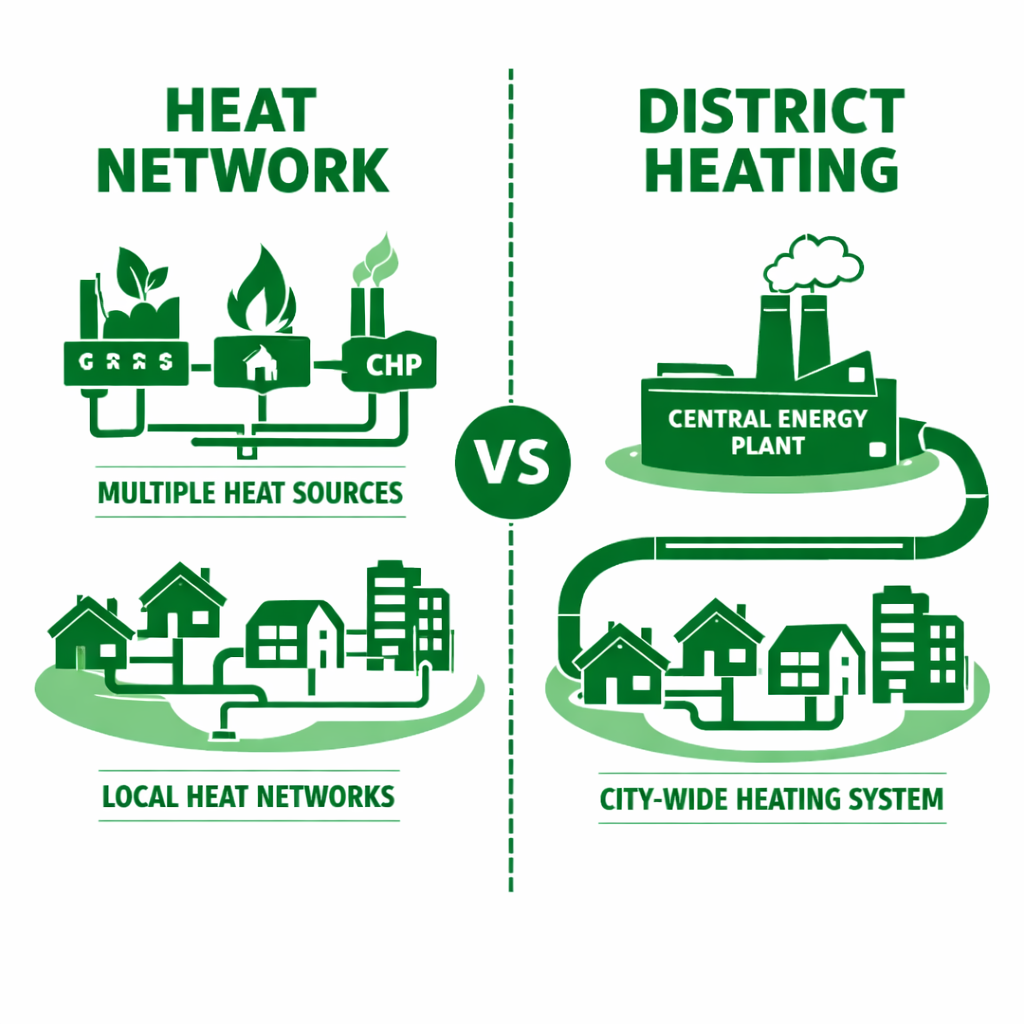
There are two main types:
Communal Heating
- Serves multiple units within a single building (e.g., apartment blocks)
- One central plant for the whole building
District Heating
- Serves multiple buildings across a wider area
- Can supply entire neighborhoods, campuses, or cities
Benefits of Heat Networks
Heat networks offer a range of advantages for homeowners, businesses, and the environment:
Lower Carbon Emissions
By using renewable or waste heat sources, heat networks can significantly reduce greenhouse gas emissions.
Energy Efficiency
Centralized systems are often more efficient than individual boilers, especially when using CHP or recovered heat.
Reduced Maintenance
No need for individual boilers means:
- Fewer repairs
- Lower maintenance costs
- No annual boiler servicing
Space Saving
Without a boiler, properties gain extra usable space—especially valuable in apartments.
Future-Proof Heating
Heat networks can adapt over time, switching to greener energy sources without requiring changes inside homes.
Are Heat Networks Sustainable?
Yes—heat networks are widely seen as a key solution for decarbonising heating, particularly in urban areas.
They support:
- Integration of renewable energy
- Use of otherwise wasted heat
- Reduced reliance on fossil fuels
As governments push toward net-zero targets, heat networks are expected to play a major role in future energy systems.
Key Takeaways
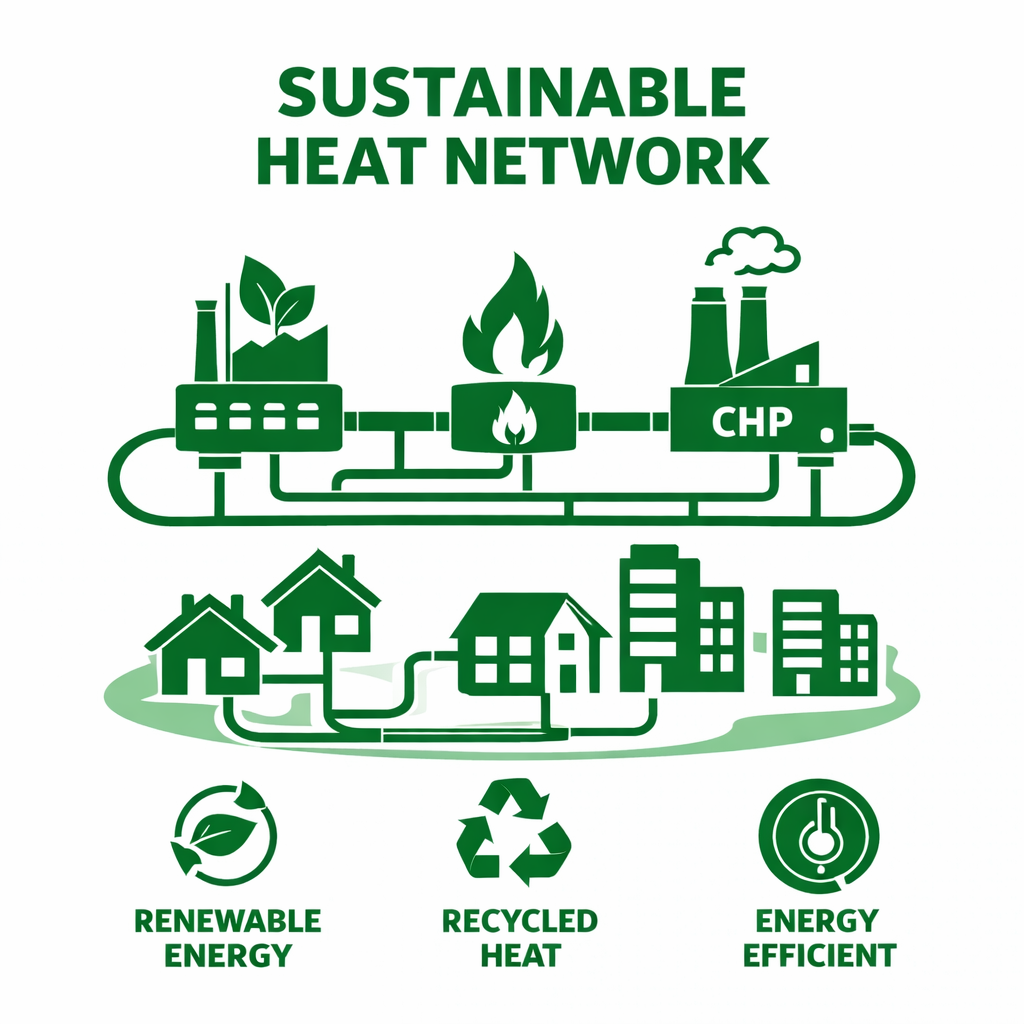
- A heat network distributes heat from a central source to multiple buildings
- It replaces individual boilers with a shared, efficient system
- It supports low-carbon and renewable energy use
- It offers convenience, efficiency, and long-term sustainability
Final Thoughts
Heat networks are transforming how we heat our homes and cities. By combining efficiency with sustainability, they offer a practical path toward cleaner energy and lower emissions.
As adoption grows, heat networks are set to become a cornerstone of modern, environmentally responsible living.